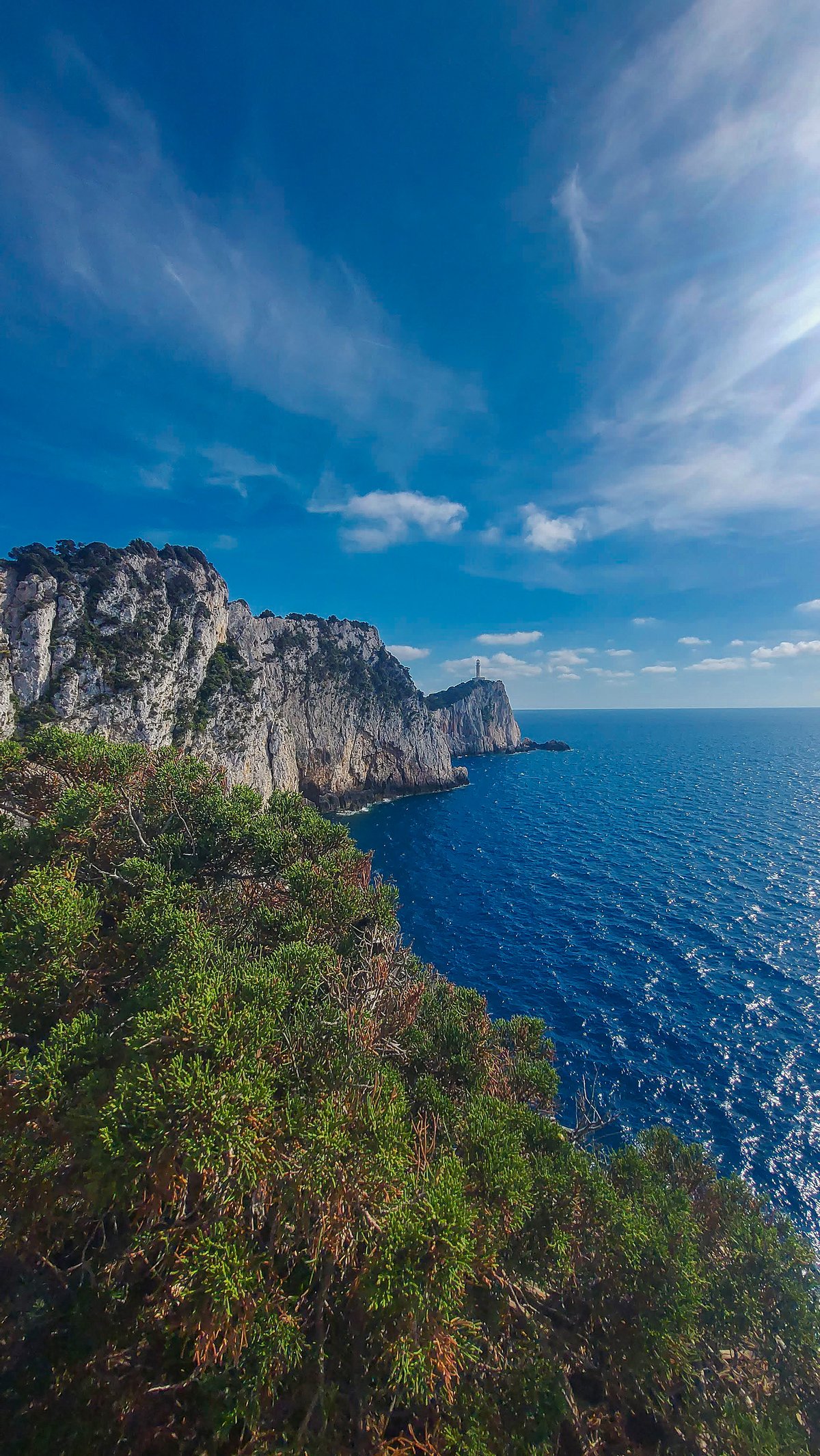
The journey to the cape feels like a trial or, perhaps more accurately, an initiation. You follow the road towards Porto Katsiki, leaving behind the promise of the famous beach, and continue towards the headland, where the island begins to shed its covering.
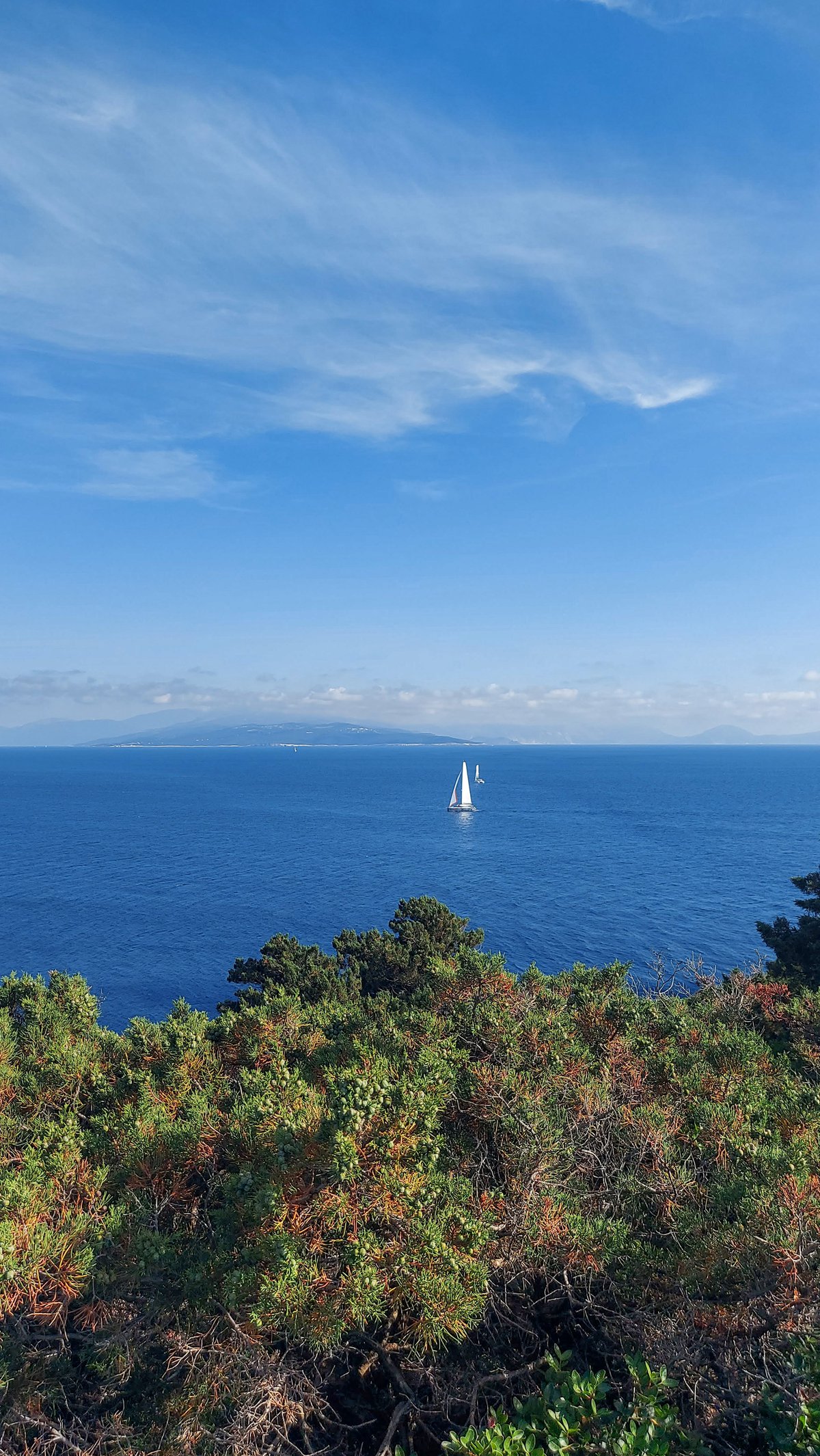
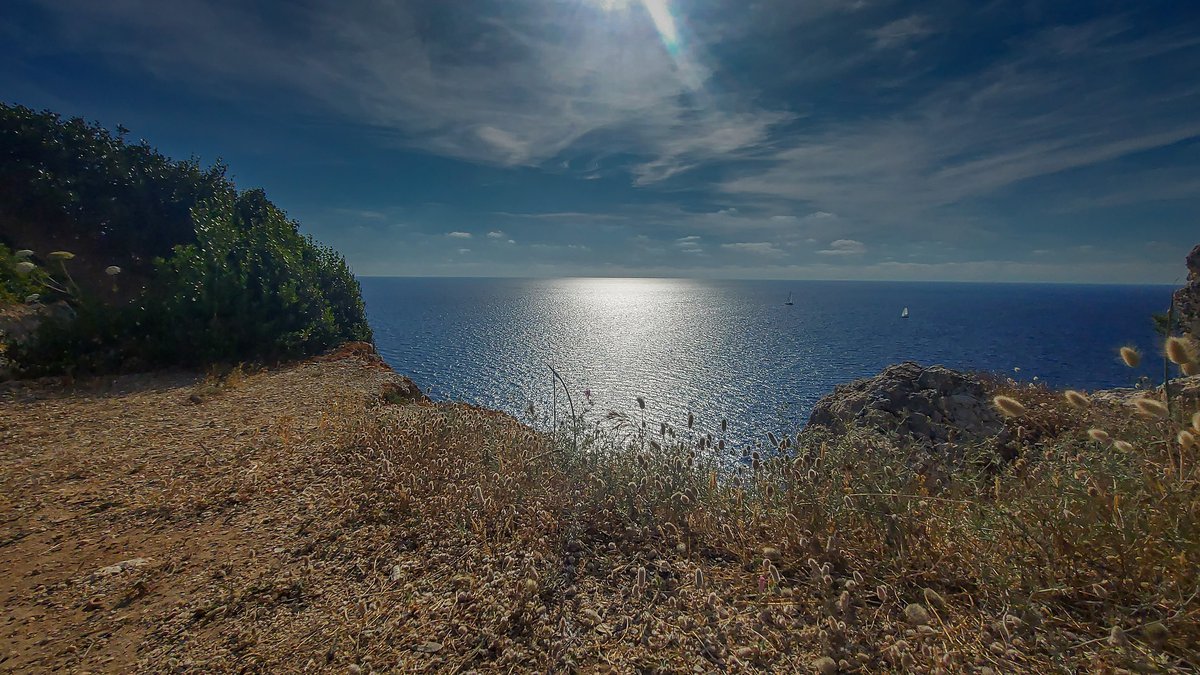
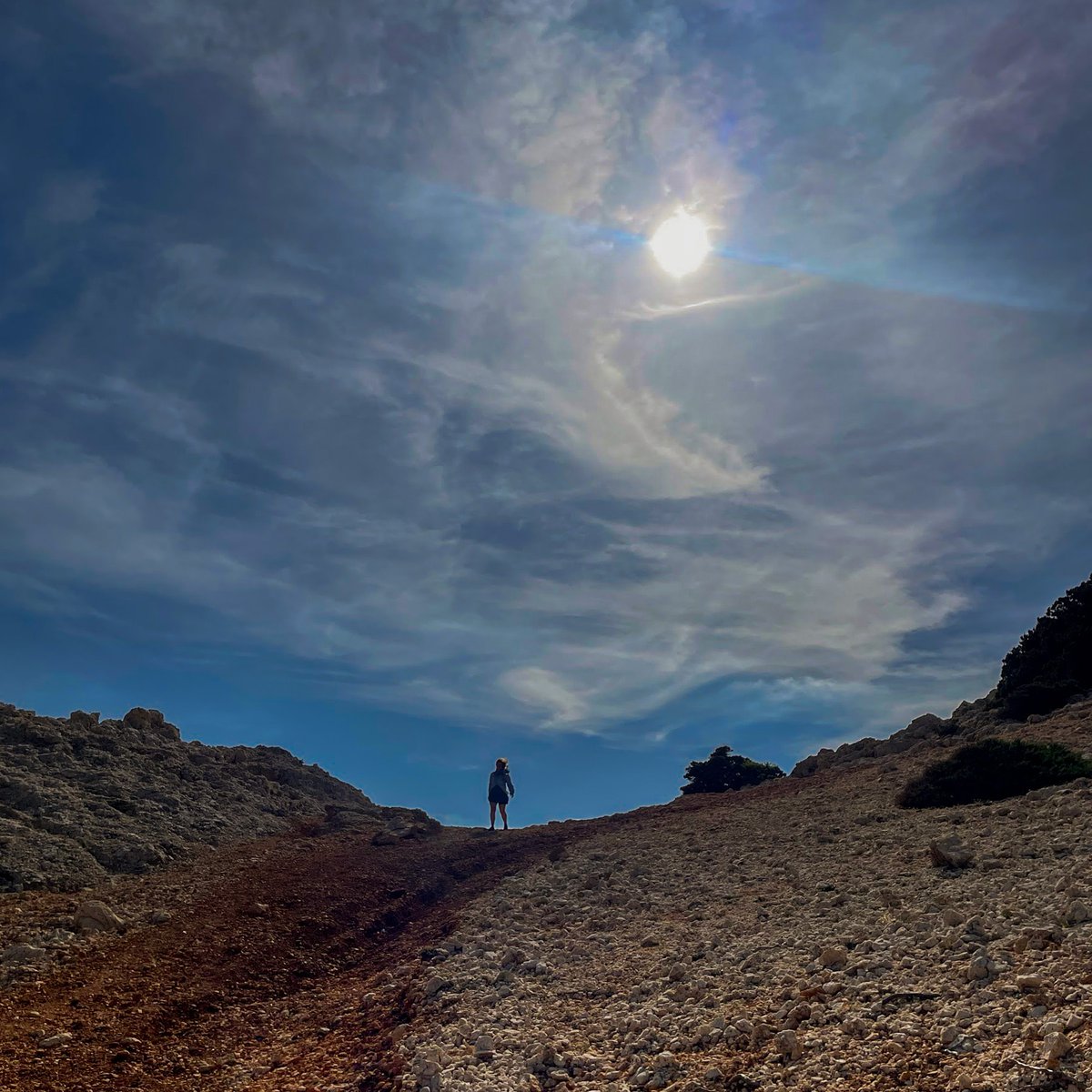
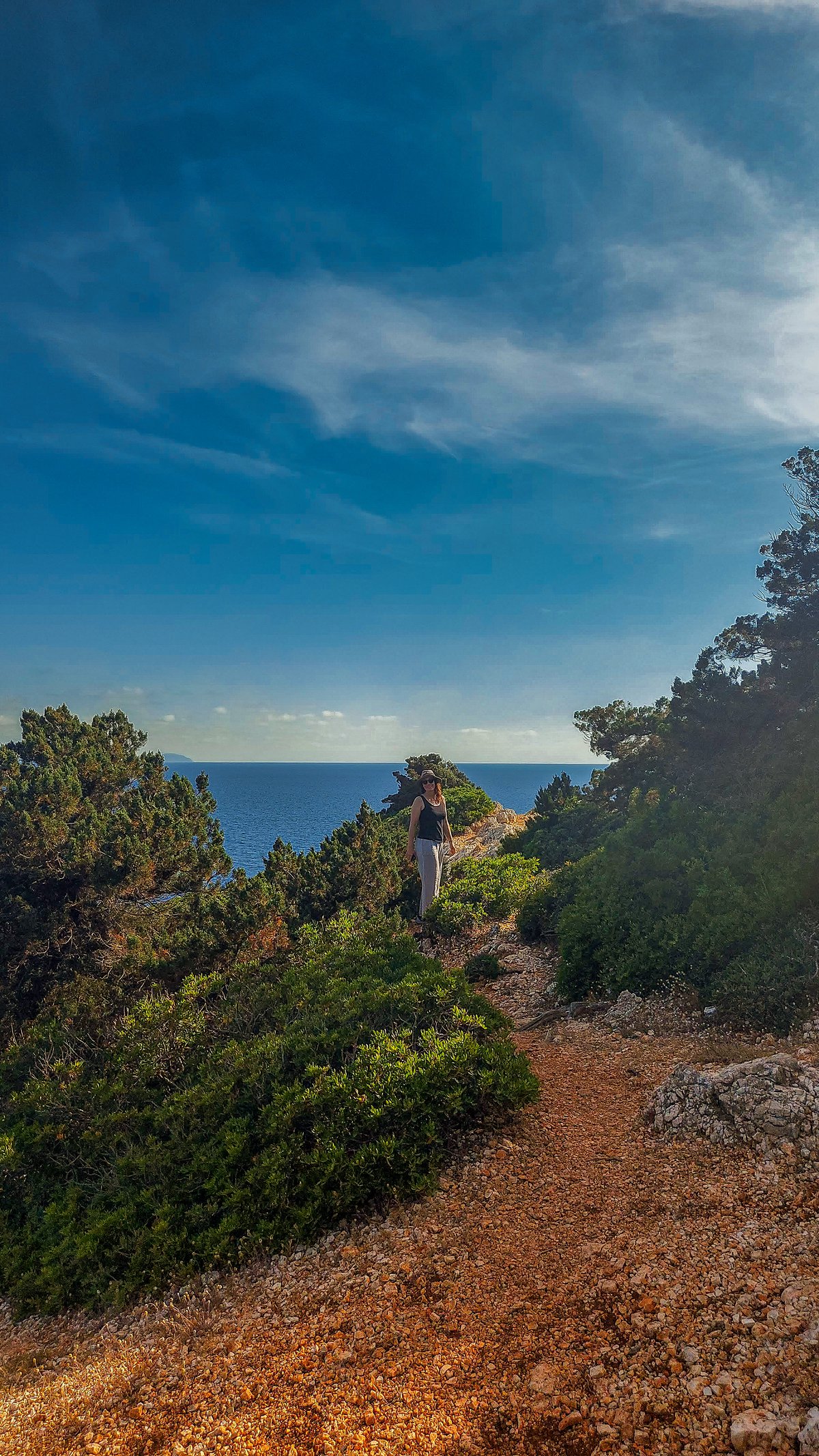
As you move forward, the landscape continually changes its face. The pine trees grow lower, giving way to shrubs, and little by little the lush scenery becomes more austere. Here, stone and light reign supreme. It is as though the island itself is preparing you for a place where you have come to experience something extraordinary.
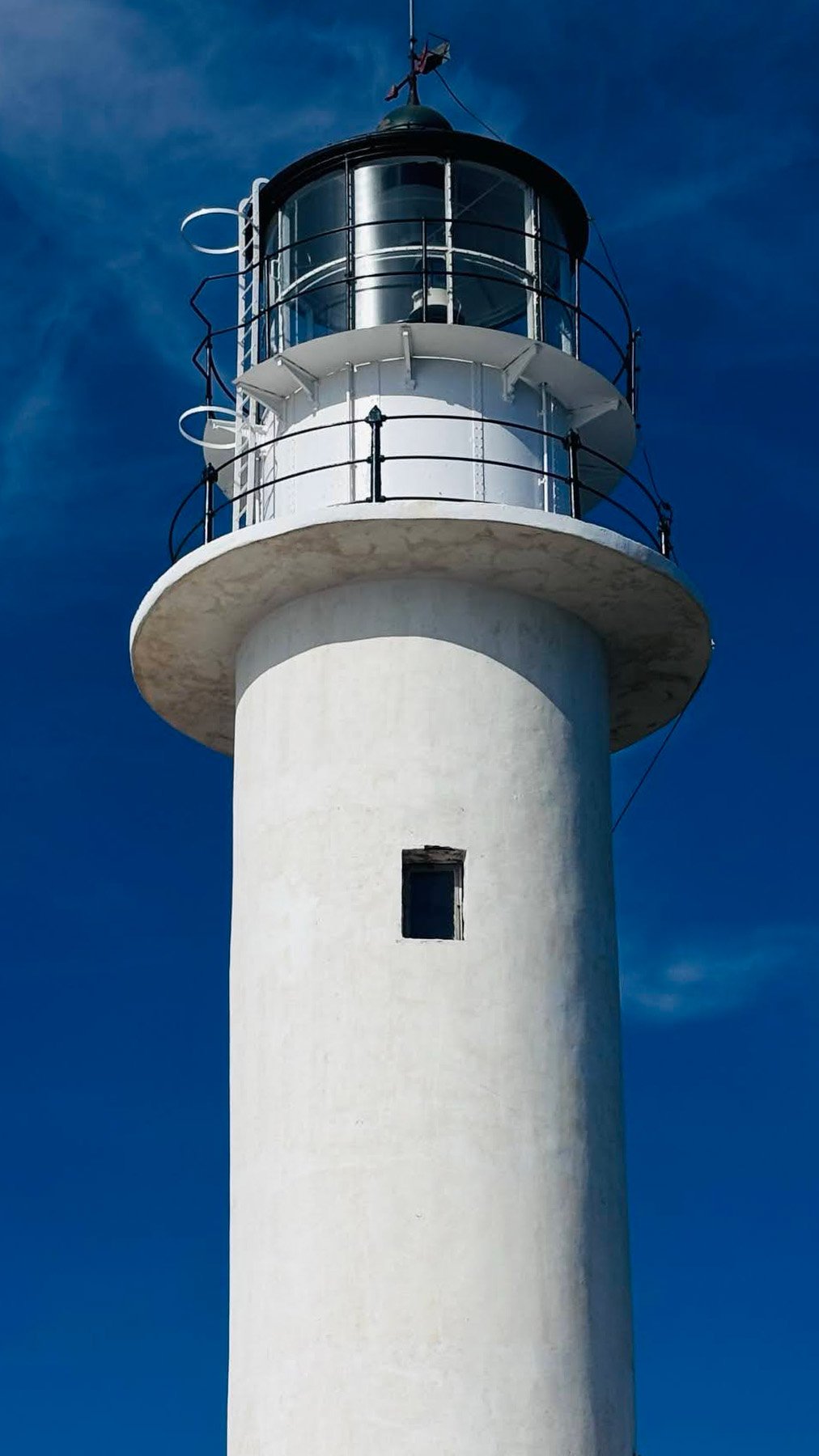
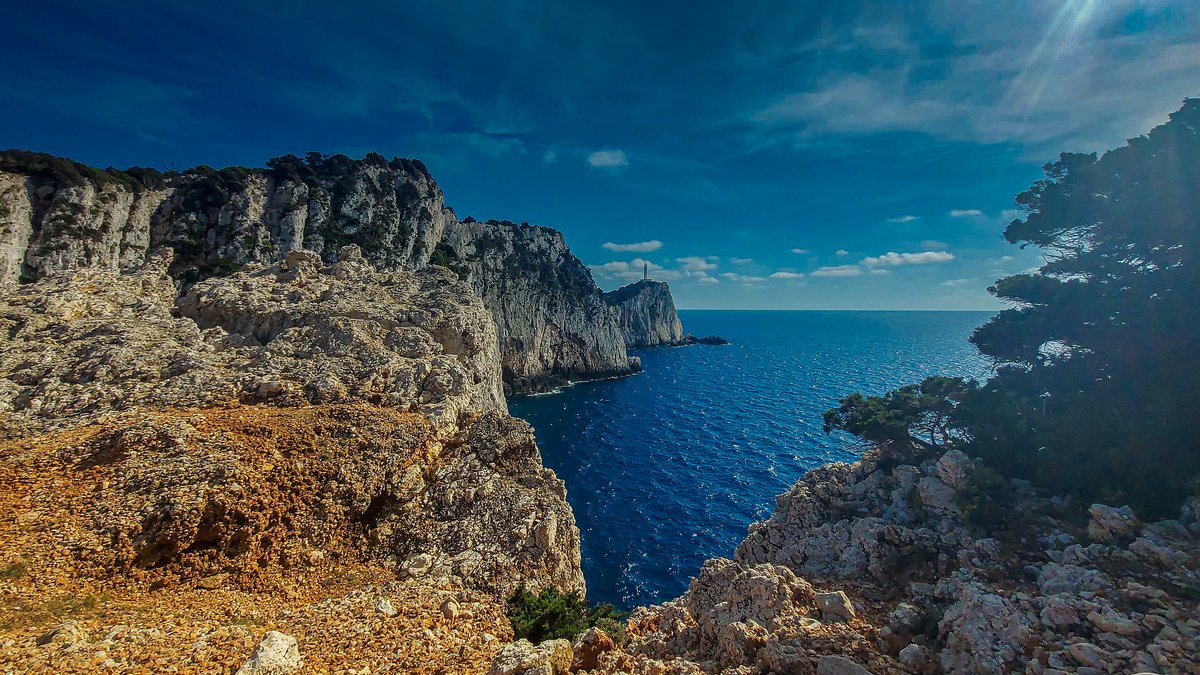
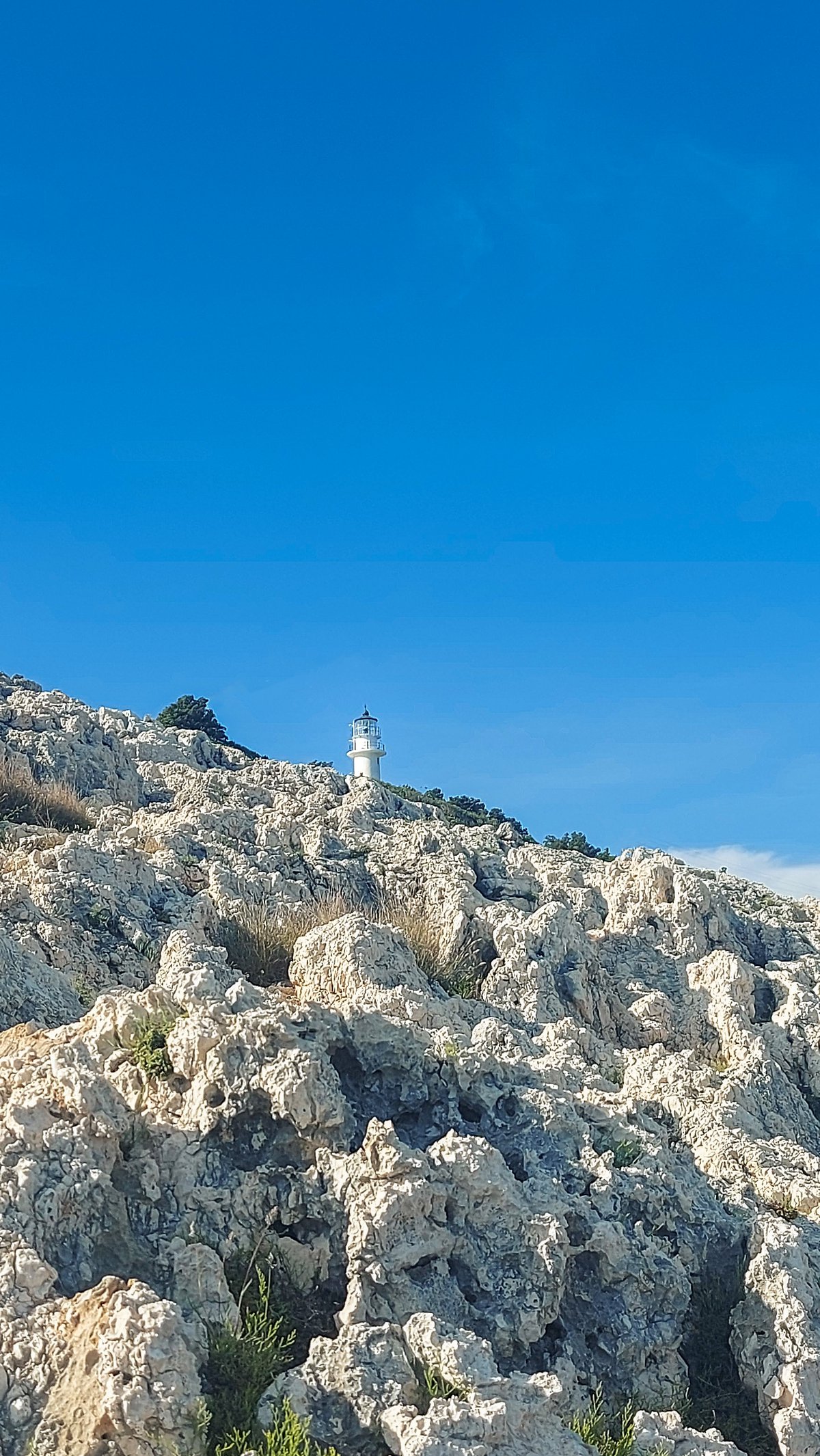
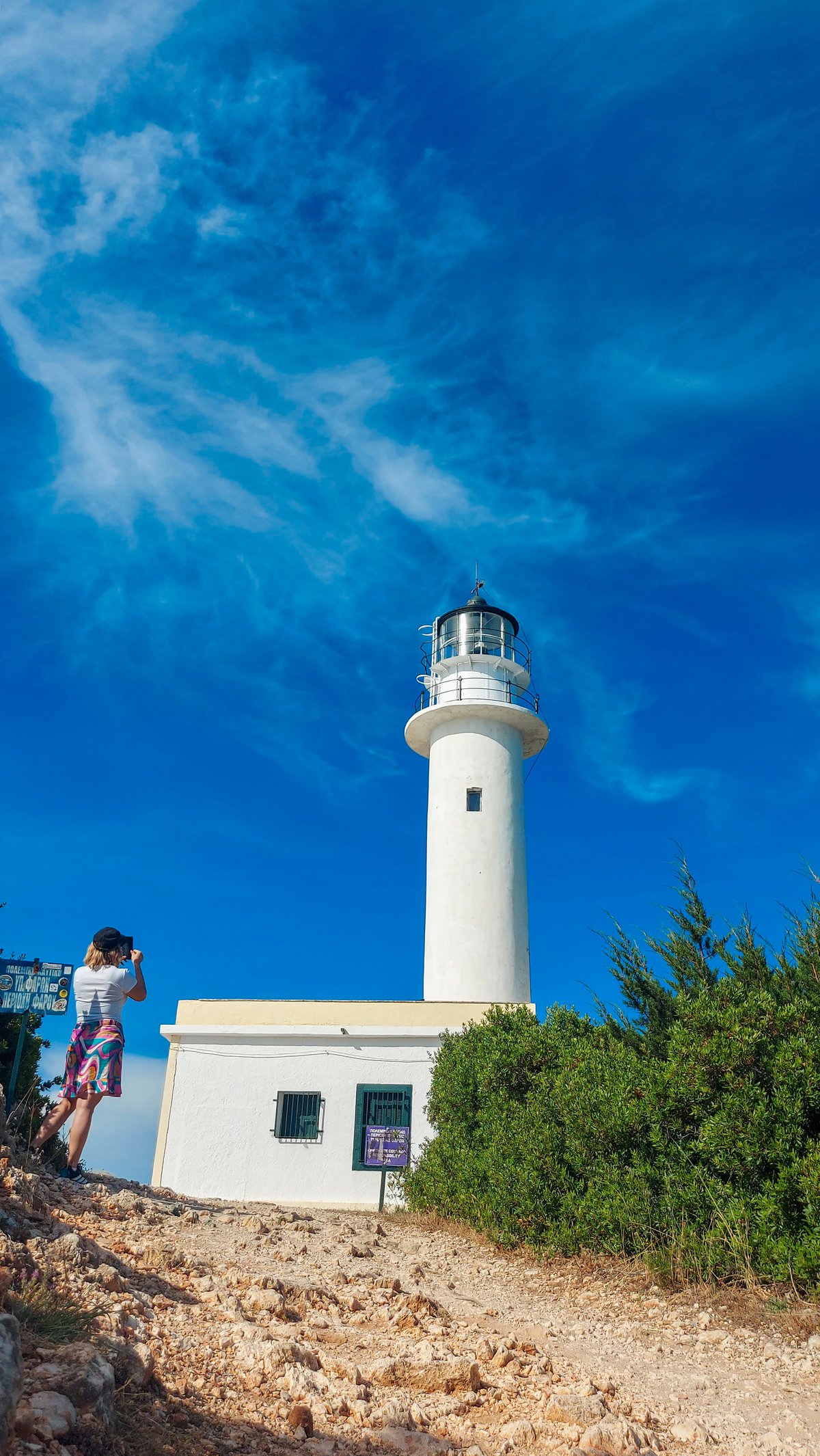
The Doukato Lighthouse appears at the end of the road, spare and dazzlingly white against a sea that seems wild and primordial. Its official history is brief but eventful: extinguished during the Second World War, it resumed operation in 1945, suffered extensive damage in the earthquake of 1953, was restored in the mid-1950s, and was electrified in 1982.
Yet the story of Lefkatas does not begin with the lighthouse. The lighthouse is merely its final chapter.
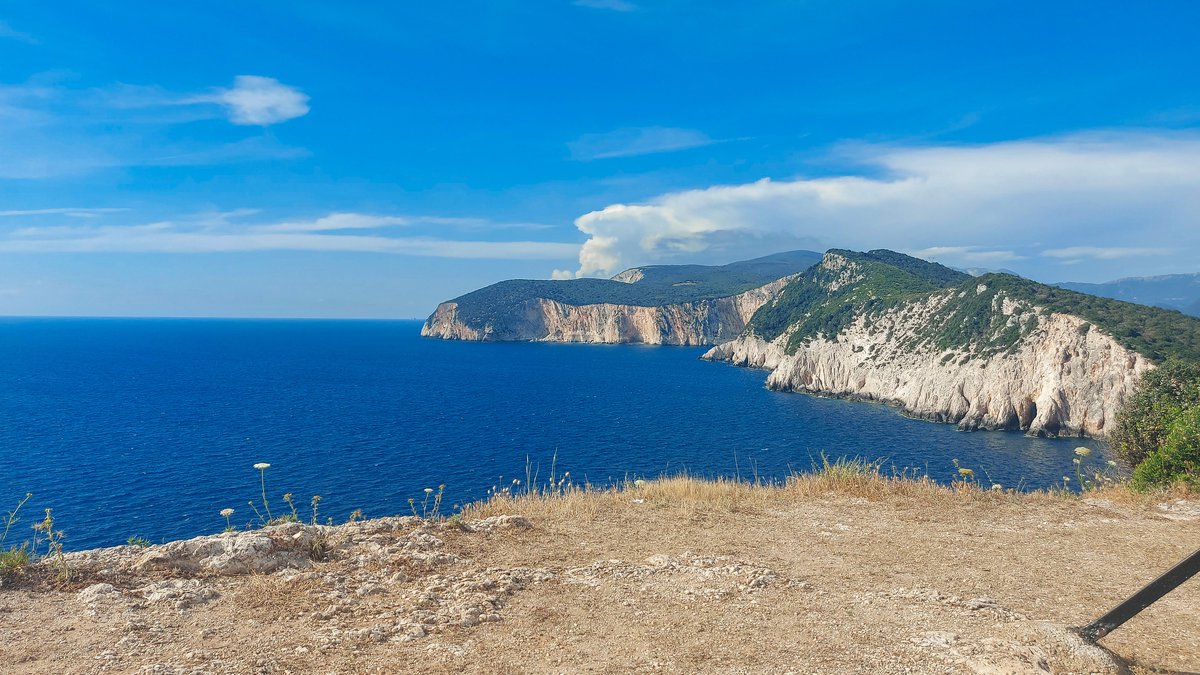
Before the lighthouse, the sanctuary of Apollo Lefkatas stood here. Its location was anything but accidental. Apollo, god of light, purification and music, seems almost inevitable at a place where the light, magnificent and radiant, reveals everything. The white cliffs from which, according to one interpretation, Lefkada took its name, plunge abruptly into the sea, like the edge of a page cleanly cut away. Below, the Ionian Sea continually shifts in colour: pale blue, deep blue, silver.
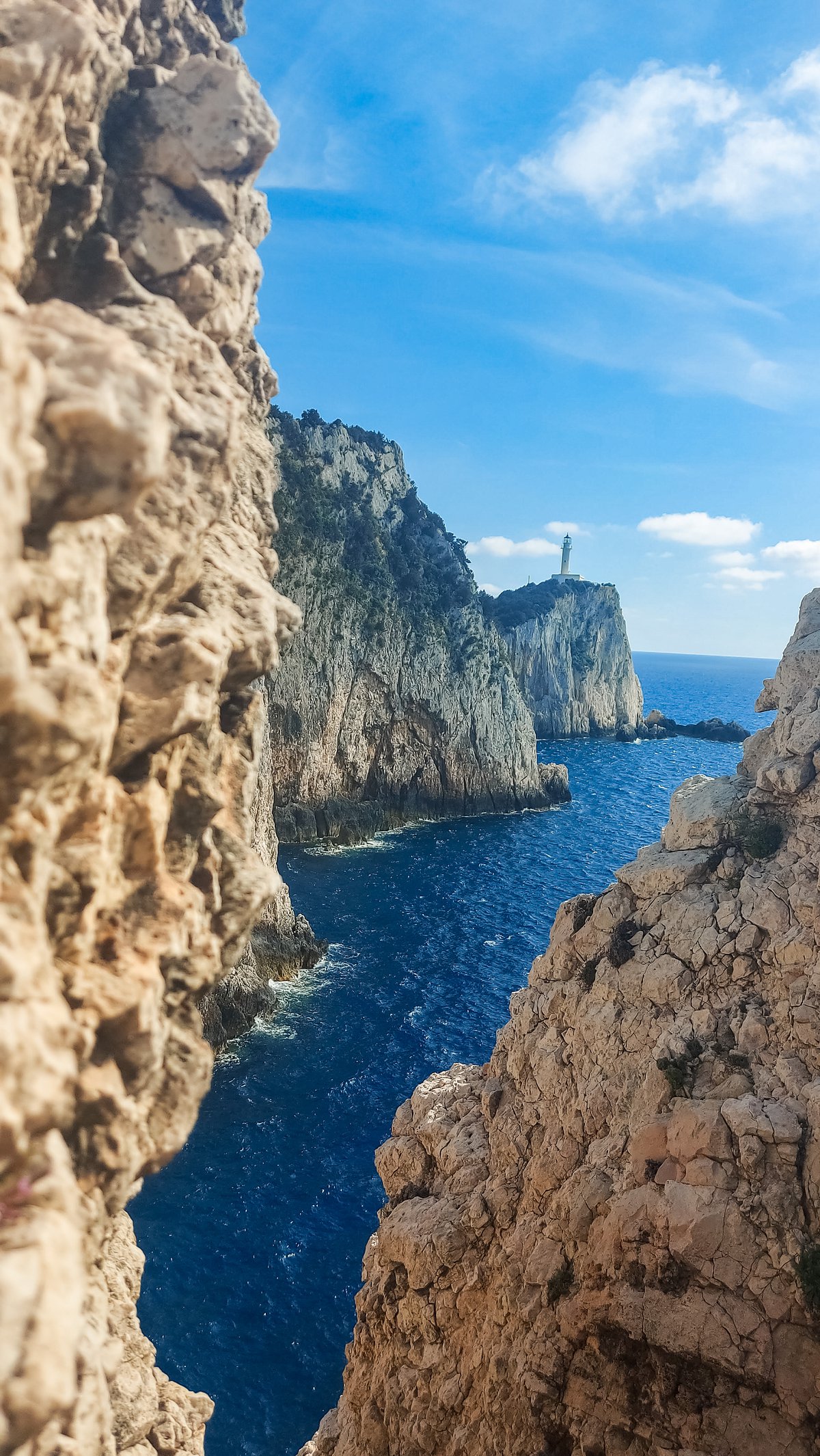
Since antiquity, Lefkatas has been a place where myth found its natural setting. Referring to the temple of Apollo Lefkatas, Strabo speaks of the famous “leap”, which was believed to offer deliverance from the torment of unrequited love. Tradition even has it that Sappho came here, driven by her hopeless love for Phaon. There is no need to read this as historical certainty; perhaps the story is more powerful precisely because it remains a legend. The place itself explains why such a tale was born here.
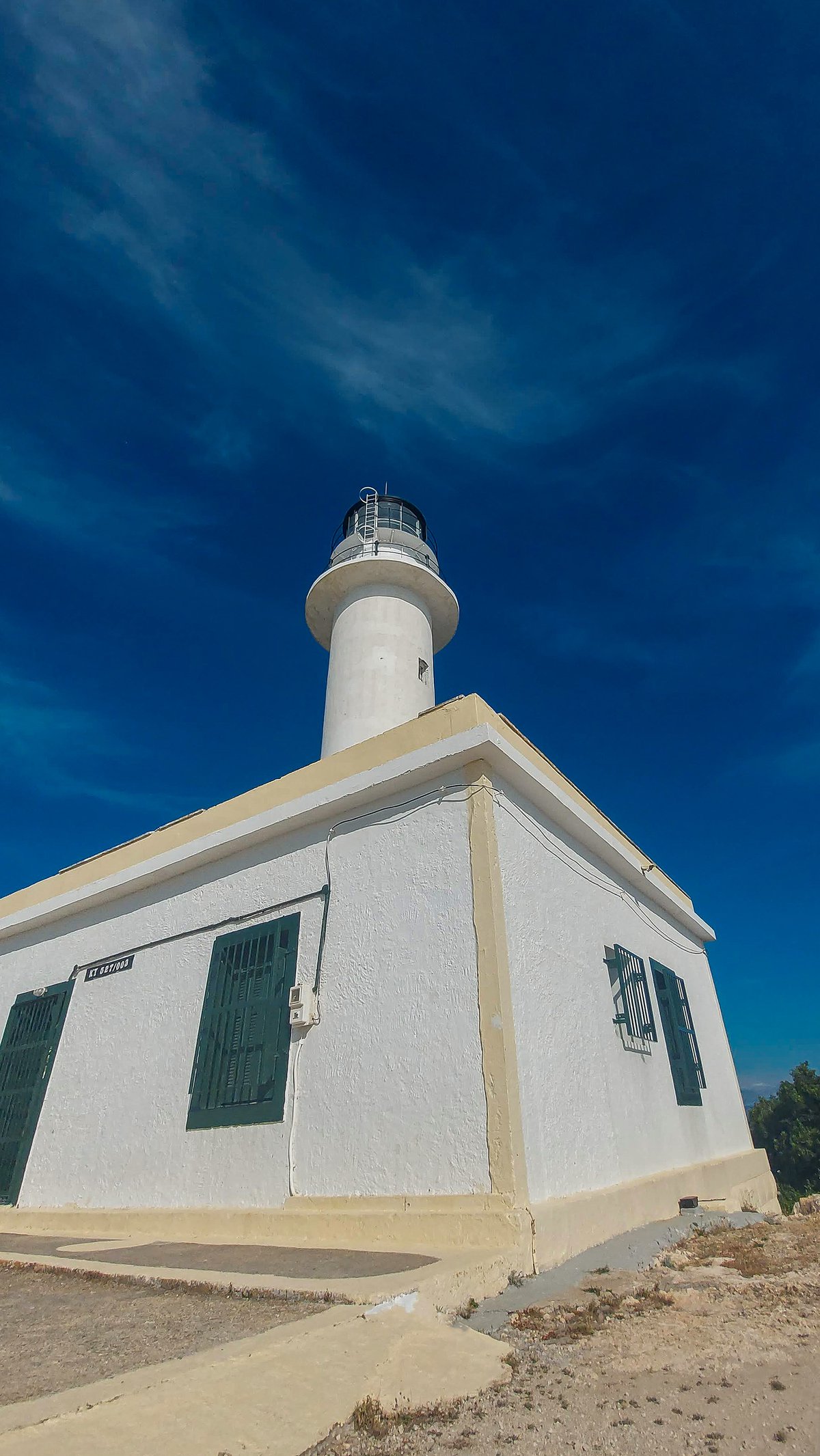
Older accounts also speak of rituals and acts of expiation, of people being cast from the cliffs with feathers tied to their bodies while boats waited below to rescue them. Today, all this seems almost unbelievable. And yet one need not take these stories literally to sense the truth within them: Lefkatas has always been a boundary. Between land and sea, safety and danger, love and loss.
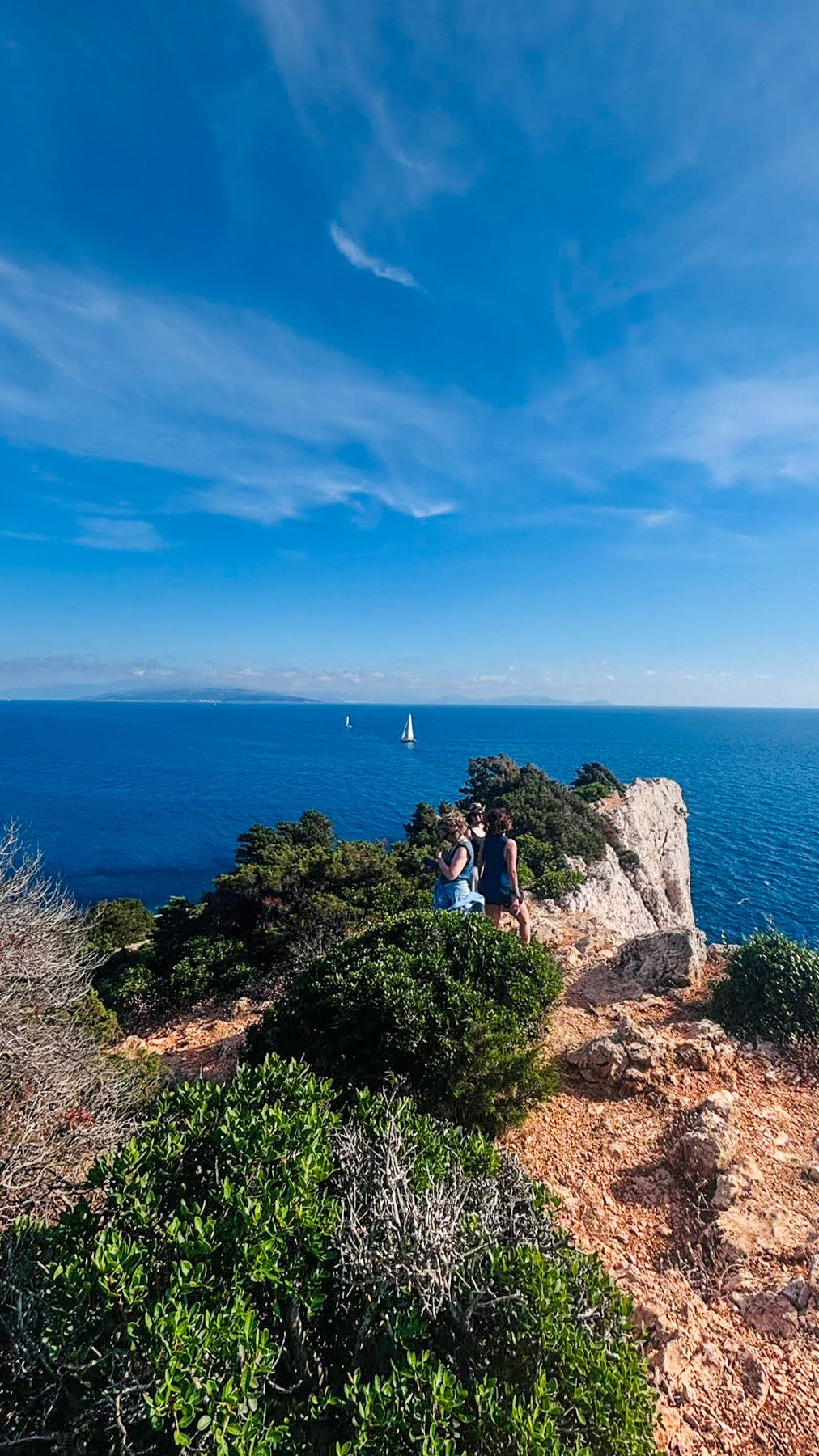
The natural landscape here is sublime. To the left, the cliffs rise bare and sharp, filled with shadows and fissures. Ahead, the cape stretches into the sea like the prow of a stone ship. Far below, where the eye seems to tumble downwards, the water foams as it crashes against the rock.
All around, low vegetation, thyme and mastic shrubs, clings stubbornly to the soil with the tenacity of plants that have learned to survive the wind. Caution is essential, however, especially with children, as the precipice behind the lighthouse leaves no room for carelessness.
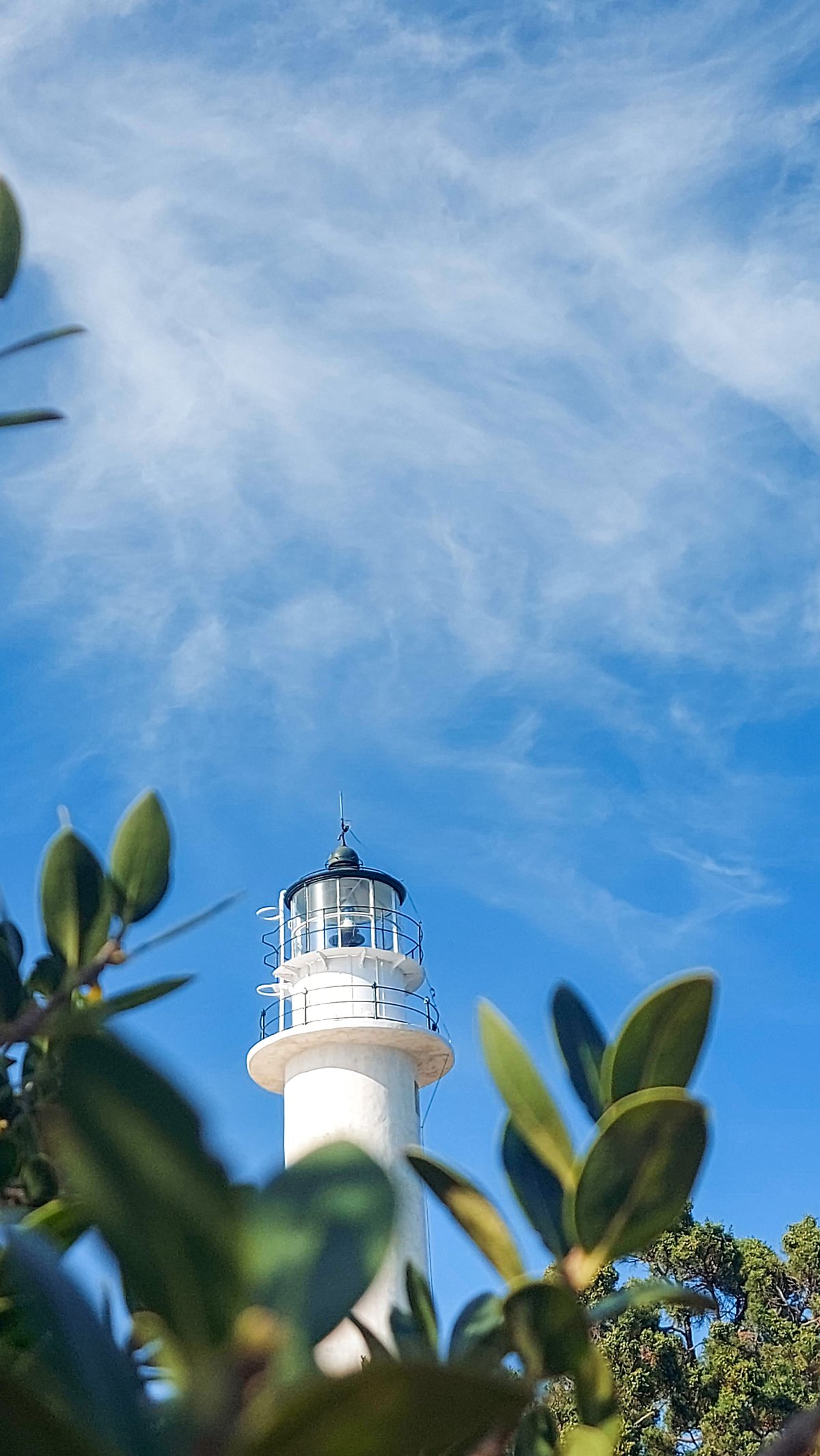
In the late afternoon, Lefkatas becomes another place entirely. The sun begins to sink towards the Ionian Sea, and the lighthouse’s whiteness seems to soften. Shadows lengthen across the rocks, the blue grows deeper, and the air becomes clearer. At Lefkatas, something rarer occurs: the island stops trying to charm you and begins to speak to you. It speaks of light and fear, of sailors waiting for a signal in the darkness, of ancient people who saw gods in the cliffs, and of lovers who preferred myth to reason.
As you leave, you look back. The lighthouse grows smaller, but it does not disappear. It remains there, immovable, at the edge of Lefkada, like a punctuation mark at the end of a long sentence or rather, like a semicolon: a pause for reflection.