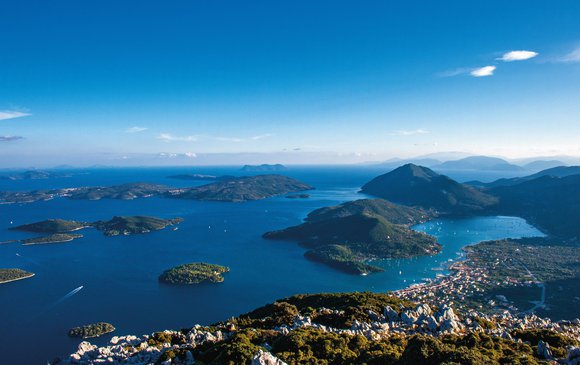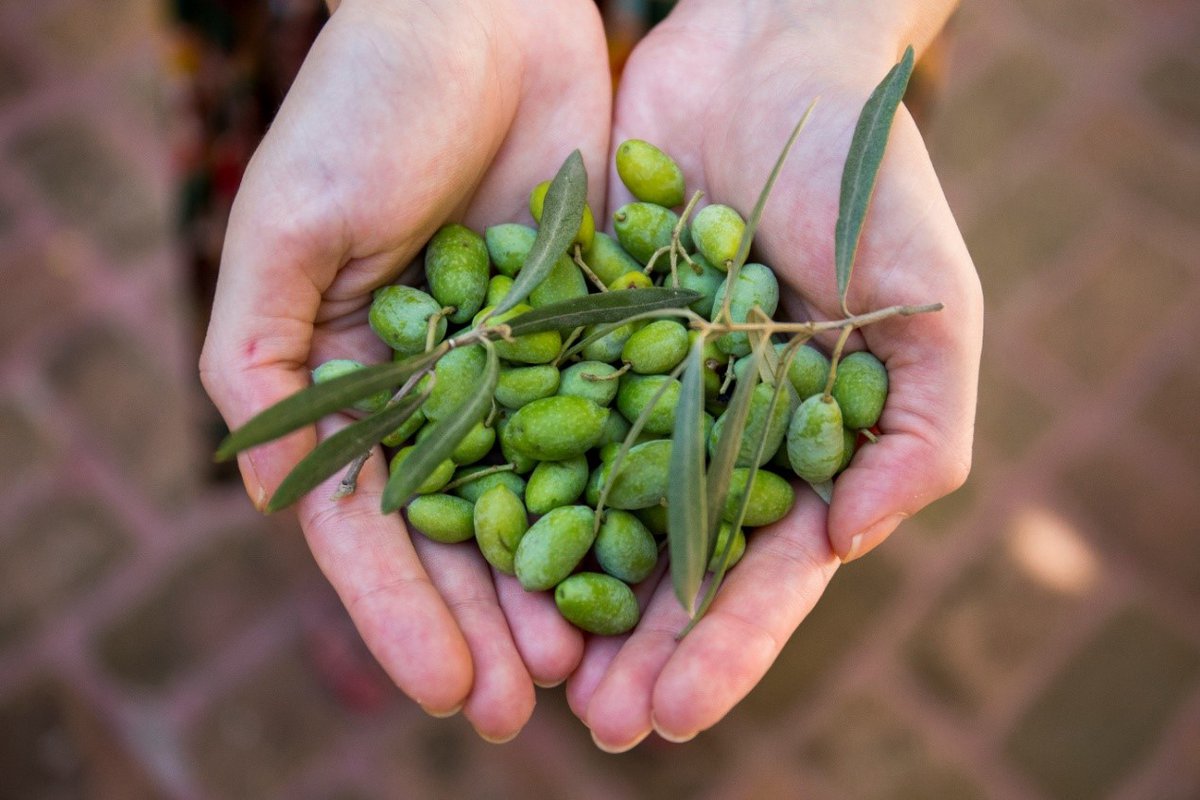
At this time of year, when the olive harvest is in full swing, it is worth remembering an entire way of life that was closely bound to olive picking in Lefkada: the hard work in the fields, the simple meals eaten beneath the trees, the fires lit for a little warmth, as well as the customs and small stories that accompanied the harvest.
Through the writings of Evi Voutsina and the testimonies of people from the villages of Lefkada, scenes of everyday life centred around the olive tree unfold. The “trogades,” the olive trees dedicated to a saint, traditional ways of processing the fruit, meals in the olive groves, and memories of the harvest all come together to form a small part of the island’s local memory and tradition.
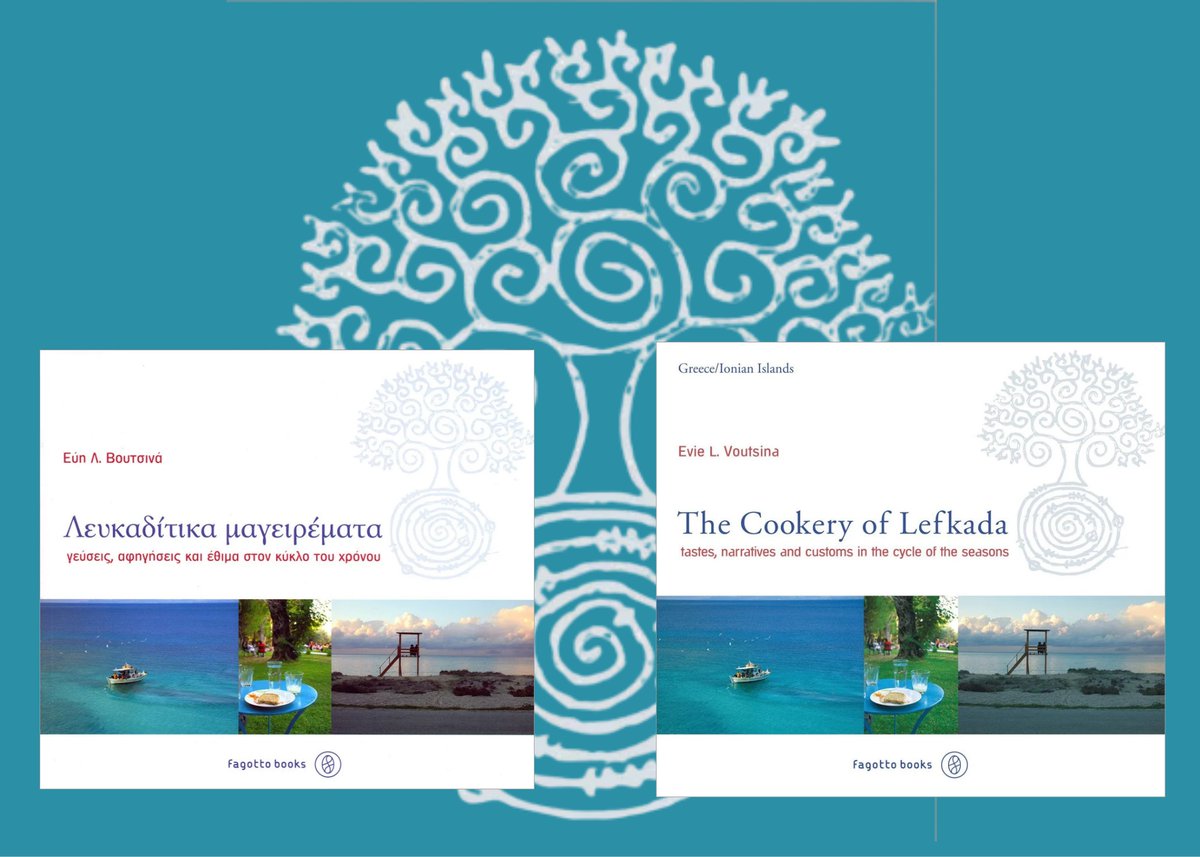
The texts that follow are excerpts from Evi Voutsina’s book *The Cookery of Lefkada*
Snack at olive gathering
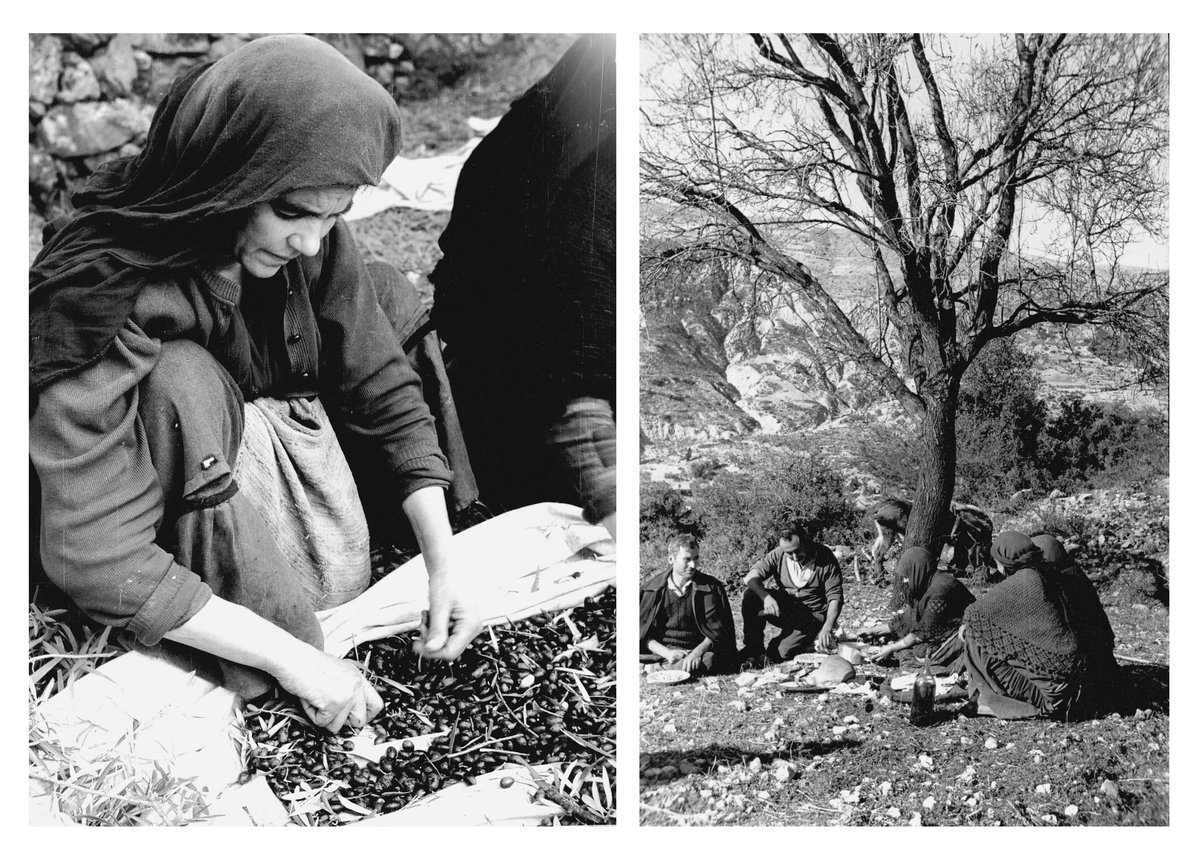
In the old days, harvesting the olives was very tiring work. The ground beneath the trees was uneven, scattered with rocks, and fingers froze stiff when gathering the olives. Work went on all day until dark and often lasted until Easter before it was finished. In hard times, they would take some bread with them, and a little jar of olive oil. When things improved, they would take along a little more: salted sardines, olives, perhaps an egg or fried fish, even some savoro (a method for preserving fried fish, see recipes pp. 116-117), when there was some. It was arduous work and some nourishment was necessary, but the women were bent over double all day — they could not eat much, nor of course, anything heavy for the stomach.
Trogades (strong wind and rain)
Told by groups of women from diverse villages
“When we went olive gathering, if it was good weather, we didn’t stop, even to eat anything, so as to get on with the work. We sometimes bit off a slice of bread, bent over as we were, threw it ahead of us and, chewing on the morsel as we gathered until we reached the piece of bread, took another bite and threw it ahead again. When it was trogades weather, we would stop for a moment to rest, lit a fire to warm ourselves, and then continued.”
The saint’s olive tree
Told by Rina Sklirou from Marantohori
“One could make a votive offering of the yield of an olive tree to a saint or to the Virgin Mary. It was in the olive grove, but everyone knew to whom that tree was dedicated. They collected its olives, and the oil went to the church the tree belonged to. I bought an olive grove down by the sea, and the man who sold it to me told me that this tree was Agios Taxiarchis’s (Archangel) and that if I wanted that one too I had to ask the priest for it. So I did, I went along and paid the church what they asked and so I got that tree too. This was also the purpose of people’s gift, it was for the church to benefit. It also happened that parents or relatives gave a child an olive tree that was in someone else’s grove.”
Note: This custom of giving someone a single olive tree from somebody else’s olive grove exists also in Crete. It may be current in other places which I have not yet recorded.
Grafted olive trees
Told by Yiannoula Vaghena from Niohori
“We do not neglect our olive trees. If, for instance, there were two or three wild trees in your vineyard, they were grafted, that is, they became ordinary olive-bearing trees, called kentromades. However, as the tree’s roots grow, it is not good for the vines, so the vineyard is uprooted and the land turned into an olive grove. There is a better market for olive oil.”
The magic of the olive grove
Constantina Georgakaki, Sora Kate, Stokhastis Editions, Athens 2007
Age-old olive trees with hollows in their trunks, strange living entities of constant provision. They offered so much: shelter in a sudden rainstorm, shade in the summer, the music of the leafage and their play in the breeze, twigs for the animals, logs for the fire, their peaceful presence, and the security of their yield. At harvest time, the plain was black with the fruit. The air re-echoed with the sound of striking of the beaters, and the place was thronged with women bent over to gather the olives, from first light until dark, with the spectacularly quick fingers of their tortured hands, without speaking and totally absorbed in their search for the fruits among the spiny bushes and ferns. In the evening, they went home with bundles of twigs balanced on their heads for their beasts.
The holiday fire
Told by a man from Kalamitsi
When the olive oil was pressed, housewives took a little of the leavings from the pressing. They kept it for holy days when they threw a little into the fire, and the oil residue gave out little flames, brightened the fire — a joy to see. It crackled, tiny joyous sounds giving a holiday atmosphere. As recorded in Pantazis Kontomihis’s book, these brittle slabs of the leavings from pressing were called zvedin, and, Mrs. Yiannoula Vaghena tells me, in Neohori zvidines. She says that when a piece of the slab was burned in the fireplace, it was not only a pretty sight but also gave off much heat. This, she says, was useful because of the scarcity of fuel, besides the laborious process of carrying it home.
“When the Italians closed the olive presses in the Occupation (during WWII), people crushed olives in the washtub to extract a little oil.”
Skasolies
Arsenia Vrettou, Vafkeri
Choose small, unblemished green olives and crush them with a stone. Put them in a spacious vessel with just enough water to moisten them. Add a little wood ash to speed the process. Mix well together. Let them stand for a day and then wash them thoroughly with hot water, spread them in a flat pan, dust with oregano, and put them in the oven to warm. They are edible a week later. They are sweet and dry.
Stakhtolies
Eleni Soumila, Agios Petros
They are called stakhtolies (Greek stakhti = ash; elies = olives) because they are processed with wood ash, but it is also the name of the variety. They are fairly big and round. They quickly lose their bitterness with the ash but cannot be conserved for a long time — they need to be eaten soon.
Ingredients:
- olives
- sieved wood ash
- brine (salt water)
- lemon wedges
- a little olive oil
Procedure: Boil water with two handfuls of sieved wood ash. When boiling, add the olives. Do not allow to boil, and strain them. Put a layer of olives in a basket and dust with ash, another of olives and ash again, and end with a layer of ash. Leave them like this for eight days. Make sure the basket stands in a shallow vessel for the liquid to drain without it, standing in it.
Then wash them scrupulously to get rid of any trace of ash and let them drain. They can be eaten straight away, except that they are not salted. Soak them in brine with lemon wedges and oregano. Float a skin of olive oil over the top to preserve them.
Kolymbades olives
Arsenia Vrettou, Vafkeri
The olives called kolymbades by the Byzantines and the same in Lefkada today were those most generally found in Lefkadian villages, delicious and small. Take olives for the table, but not too big. Put them in a cloth bag (preferably loose-weave fabric such as hessian) and lay it on its side. Put a heavy slab on top, squeezing the olives to drain their bitter liquid. Leave for ten days. Turn the bag over to its other side every day and replace the slab. Avoid the spot where the bag stood before because the liquid extracted is unappetising.
After ten days, put the olives in water with a little salt and oregano, and coat with a skin of olive oil to keep them from going bad as they swim in the water with oregano. Kolymbades may also be eaten straight away without soaking in water.
You can find the book "The Cookery of Lefkada" here