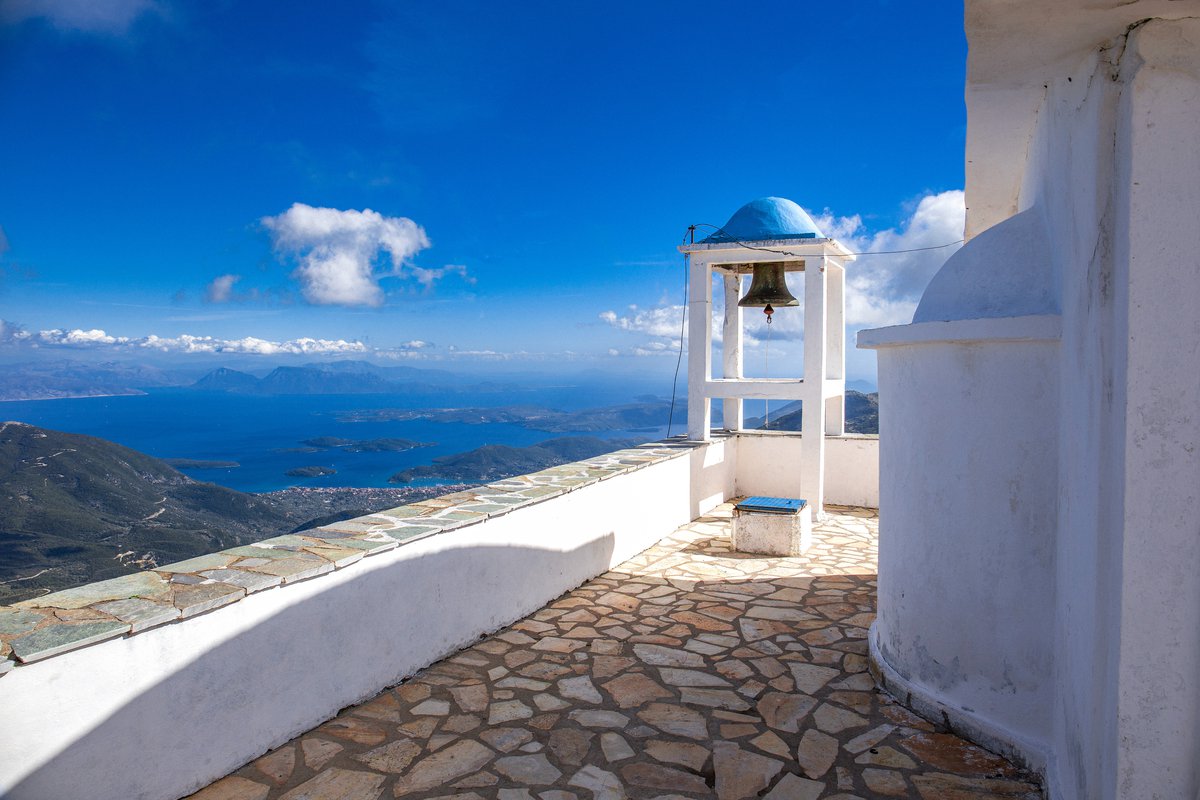
There are places you don’t simply visit; you approach them almost ritualistically, as if responding to an inner impulse that calls you ever higher. One such place is Prophet Elias in Lefkada, a small chapel standing steadfast on one of the island’s highest peaks, like a white mark of faith set against the vast light of the Ionian Sea.
The ascent begins from Eglouvi, the most mountainous village of Lefkada, perched at 730 meters and nestled among the peaks of Elati, Prophet Elias, and the plateau of Agios Donatos.
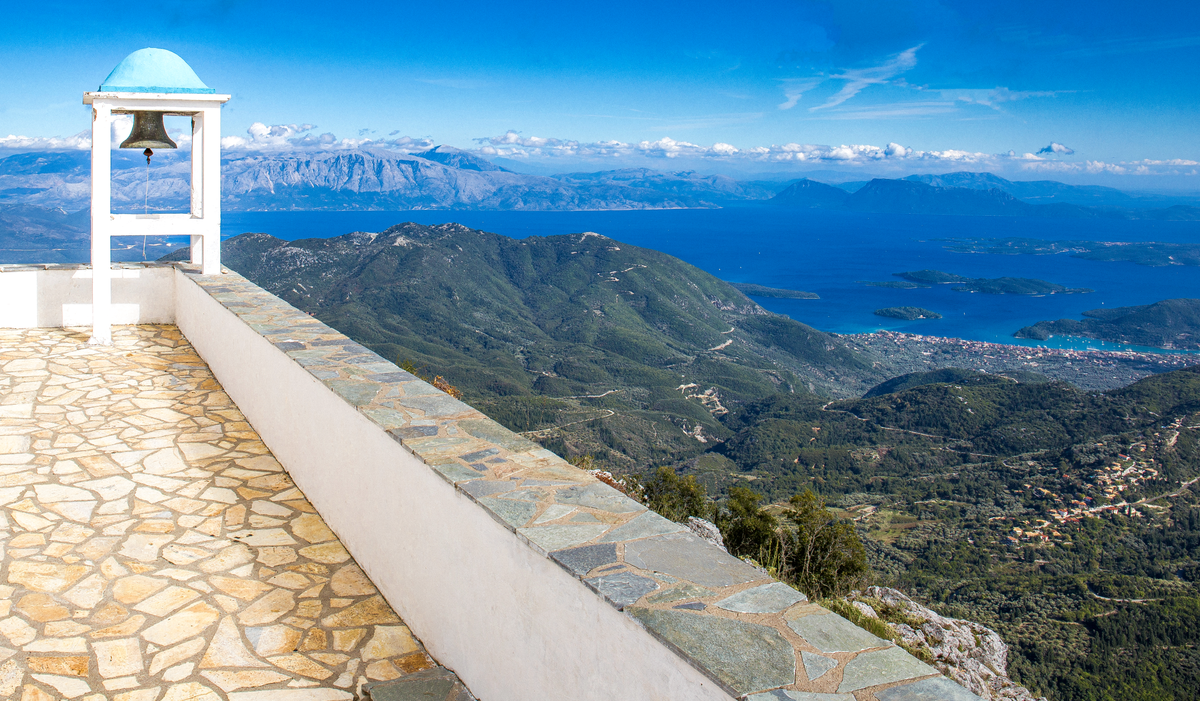
From here, the climb toward one of the island’s most breathtaking viewpoints truly begins. The road leading to the chapel narrows as it winds upward and requires careful driving. Yet the journey itself is part of the experience: with every turn, a new aspect of this austere yet fertile landscape reveals itself, where the understated nobility of the mountains coexists with the persistent traces of rural life: stone threshing floors, old mills, terraced fields, signs of labor that have left a deep imprint on the land. By the time one finally reaches Prophet Elias, there is a sense not merely of arrival, but of having achieved something.
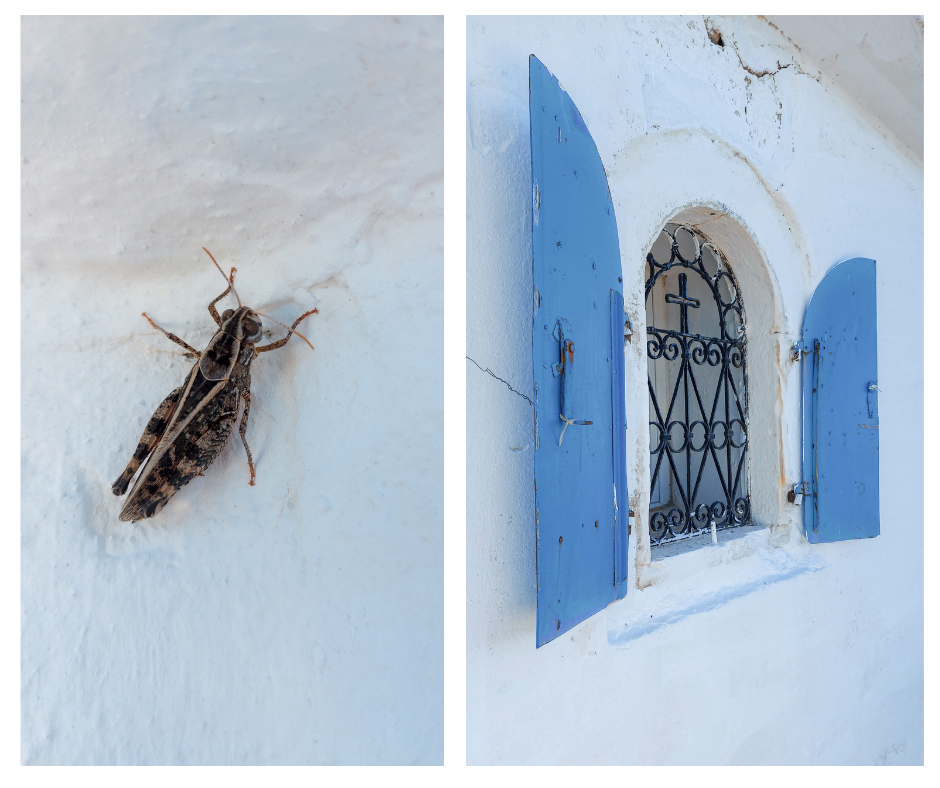
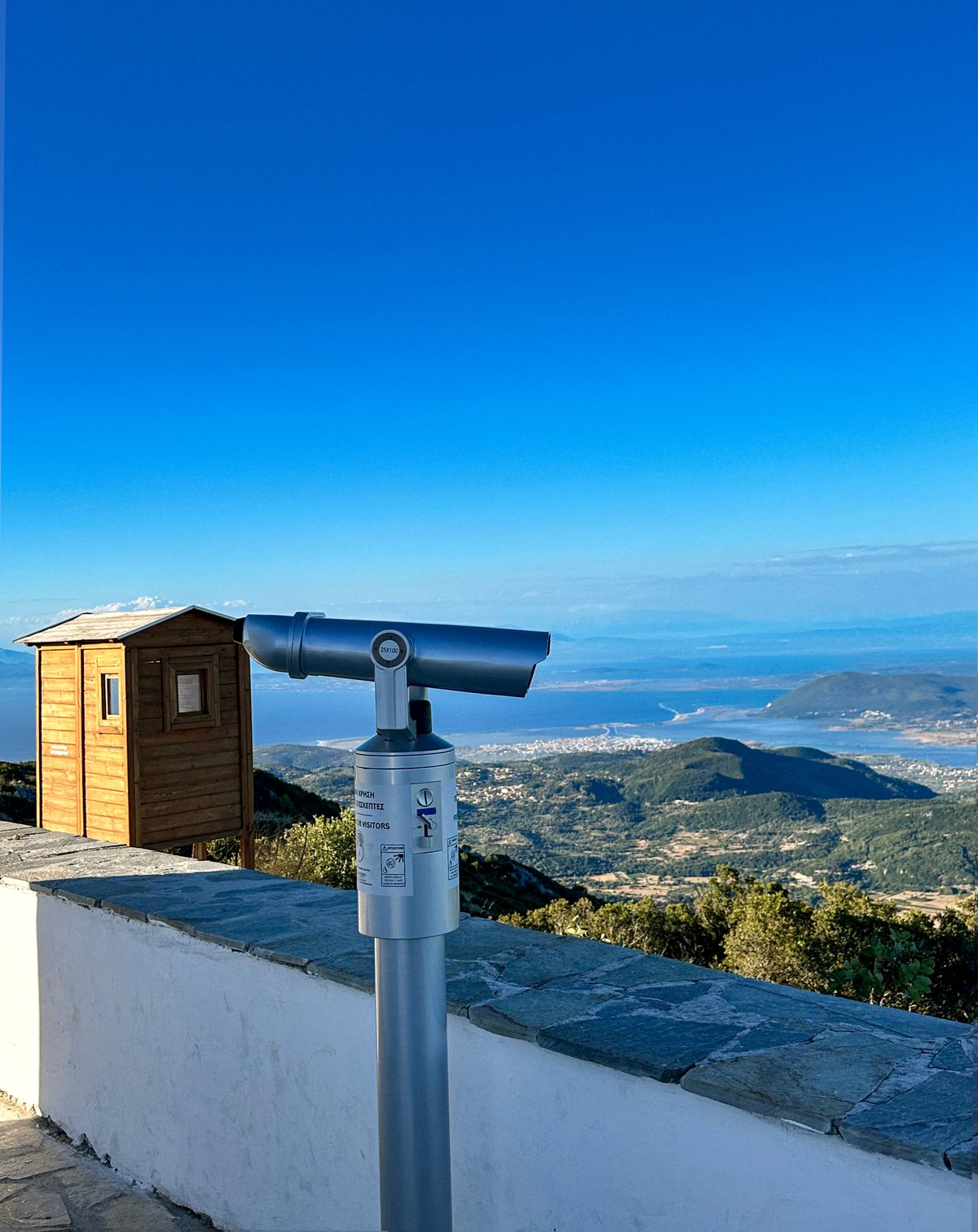
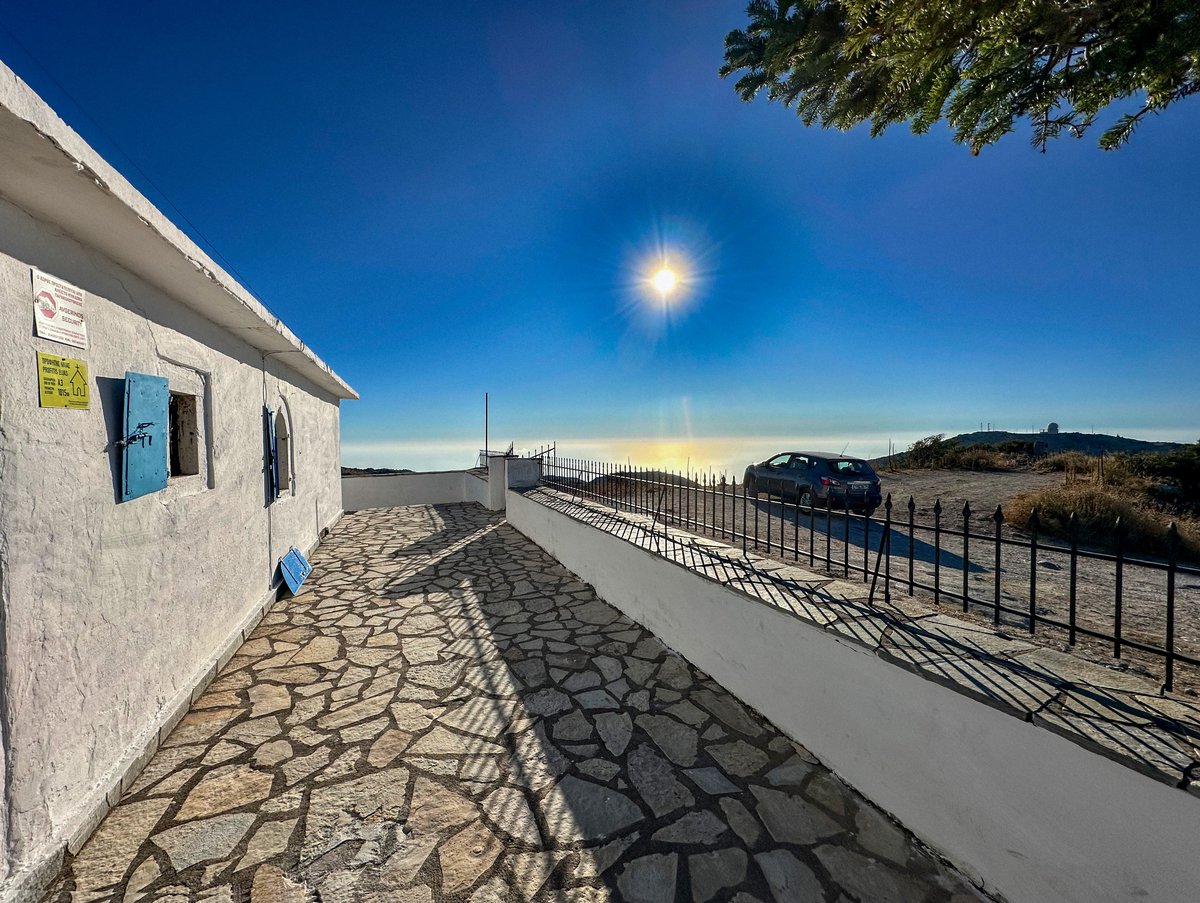
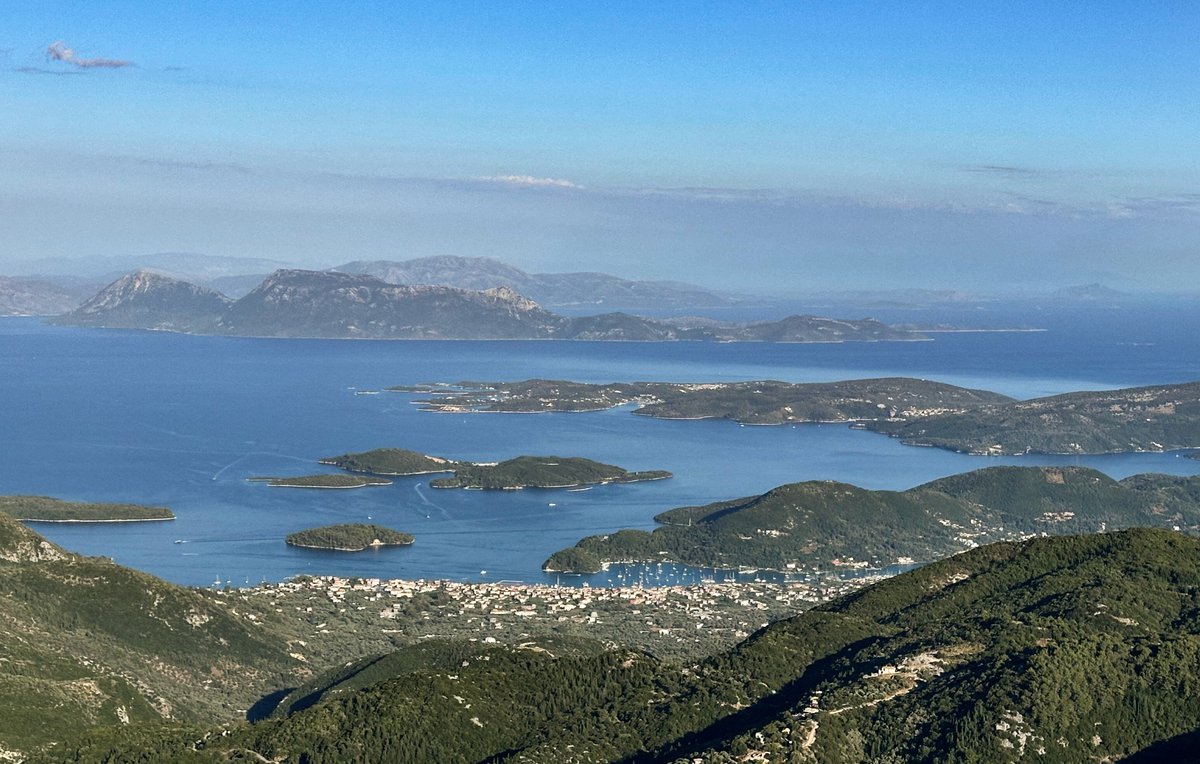
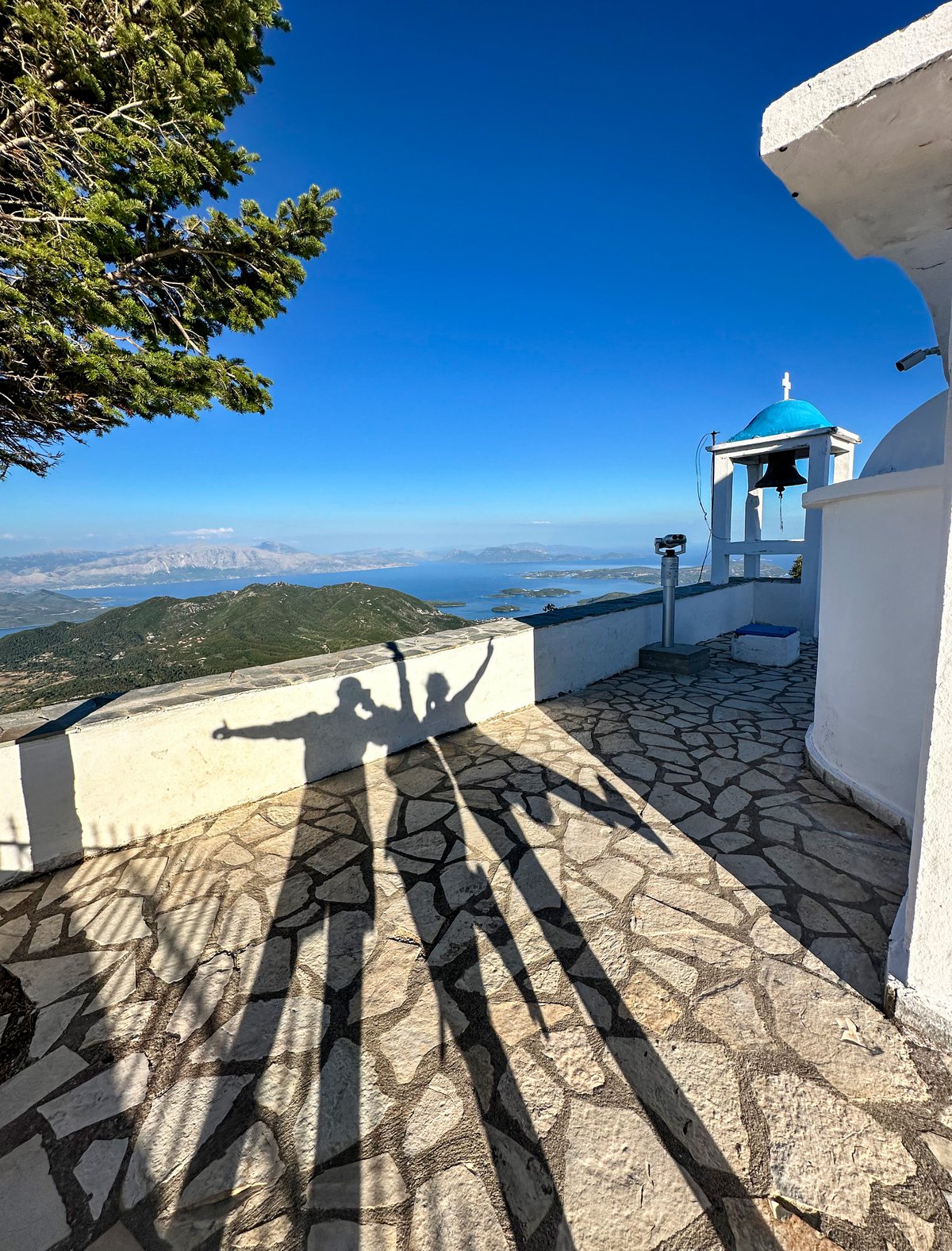
The chapel of Prophet Elias sits at an altitude exceeding 1,000 meters. Small and humble, it does not impose itself by size, but by position. It is as if the mountain itself chose to grant it the finest balcony in Lefkada. From here, the horizon opens in magnificent breadth. To the north lie the town of Lefkada, the lagoon, and the Drepanos channel. To the east unfold Nidri, the gorge of Dimosari, and a scattering of islets that seem to float in the light: Skorpios, Madouri, Sparti, Meganisi. And when the atmosphere is clear, the gaze stretches even farther, reaching Epirus and the coasts of Acarnania. A recently installed telescope now allows visitors to enjoy the view in even greater clarity.
There is something both austere and almost transcendent in this meeting of sky, sea, and mountain. It is no coincidence that those who make the climb speak first of the view, and only afterward of anything else. It is especially worth being here at dusk—when the sun tilts toward the west and the plateau of Eglouvi, the slopes, the sea, and the distant shores are bathed in a golden-red glow, taking on a dreamlike, almost ethereal quality. These are rare moments when time seems to stand still and the entire world is distilled into silence and awe.
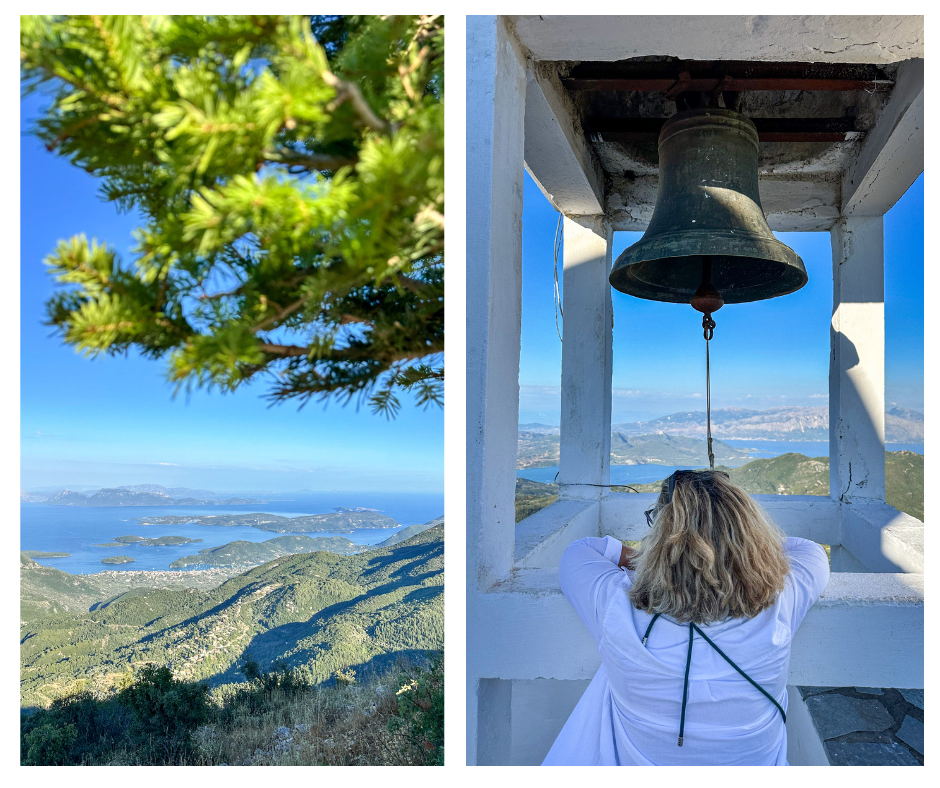
Yet Prophet Elias is not only a panoramic viewpoint, it is also a place of memory. The history of the chapel dates back to the 19th century, with its reconstruction bearing the engraved year 1869. Time, earthquakes, wear, and interventions have all left their marks upon it, without ever altering its character. On the contrary, they have imbued it with the emotional resonance typical of small island chapels: a coexistence of faith, local history, and family memory. Despite the difficulty of access, Prophet Elias has never been cut off from people’s lives; instead, it has remained deeply intertwined with them.
The site has always held special significance for the local community. In the past, on the eve of the feast of Prophet Elias, on July 19, people from Eglouvi and nearby villages would ascend with their animals, following ancient paths and steep trails, to spend the night around the chapel. This was not merely a religious gathering, but a deeply social—almost initiatory—event: a night filled with chants, prayers, conversations, reunions, and even matchmaking that sometimes led to marriages. In the darkness of the mountain, with the wind carrying voices and supplications in every direction, the chapel seemed to glow like a star above Lefkada, an image that those who experienced it never forgot.
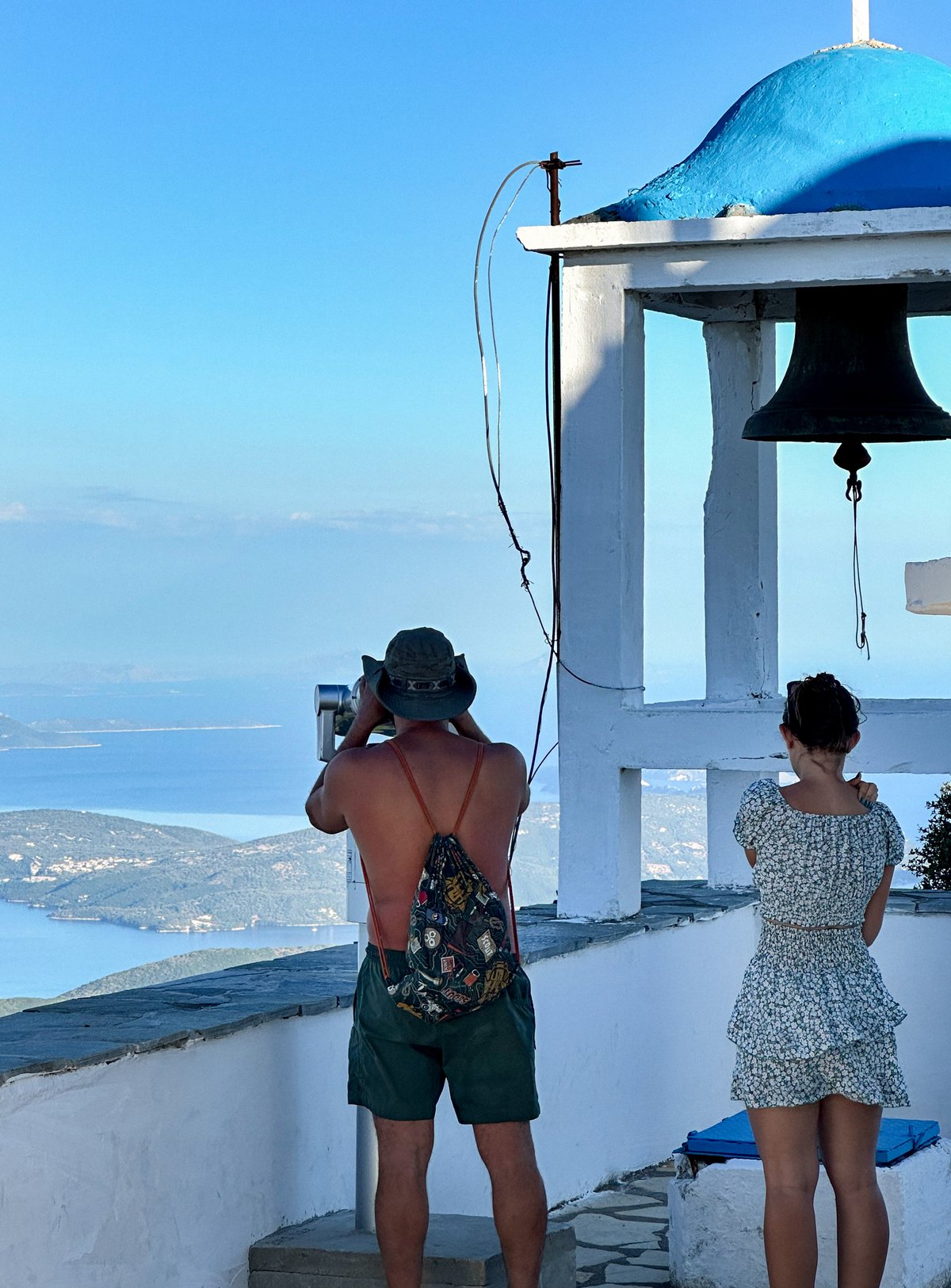
Times may have changed, but the place has never lost its living connection to the feast. To this day, Prophet Elias is celebrated each July with great devotion, drawing both worshippers and visitors who make the climb to light a candle, attend the service, and experience something of the site’s deeply ritual atmosphere. In this way, the small chapel remains a living point of reference for Eglouvi and all of Lefkada, a place that invites us to look far into the distance, and at the same time, within ourselves.
Hiking in Lefkada
Afteli: A Secluded Beach Haven in Southern Lefkada
Lefkada: The Unknown Beach of Theotokos
Discovering Alexandros, a unique Lefkadian village
24 Photos to Inspire You to Visit Lefkada
Karya: Lefkada’s alpine jem
The 15 most Instagrammable places in Lefkada
Five alpine villages in Lefkada you’ll fall in love with
Photos: Andreas Thermos